How will the new UAD 3.6 appraisal requirements, forms, and procedures affect purchasing for sellers in Valencia, Saugus, and the Santa Clarita Valley?
Starting November 2, 2026, all conventional loan appraisals must use the new UAD 3.6 format, replacing legacy forms with a single data-driven report that captures over 1,100 data points and may extend closing timelines for sellers across the SCV.
Why This Matters Right Now for Santa Clarita Valley Sellers
I want to be straightforward with you: in over 12 years of selling homes across Valencia, Saugus, Canyon Country, and Newhall, this is the most significant appraisal overhaul I have seen. The November 2, 2026 mandate is less than a month away, and based on what I am already hearing from lenders and appraisers in our market, this is new territory that may affect closing dates and contingencies in ways most sellers are not anticipating.
Why should you care? Because if your Valencia North Park home or your Saugus listing is under contract when this transition takes full effect, the appraisal could take longer, require more documentation from you, and introduce new data points that affect how buyers’ lenders evaluate your property. According to Fannie Mae and Freddie Mac’s UCDP requirements, all new appraisal submissions must use UAD 3.6 after November 2, 2026. The old forms, the ones every agent and appraiser has relied on for over a decade, are being retired.
So what does that actually mean for your sale? Let me walk you through it.
What the New UAD 3.6 Appraisal System Changes in Valencia and Saugus
The heart of this change is the consolidation of multiple legacy appraisal forms into a single, dynamic Uniform Residential Appraisal Report. If you have sold a home before, you may remember the 1004 form for single-family homes, the 1073 for condos, or the 2055 for exterior-only appraisals. Per Fannie Mae’s updated UCDP guidelines, all of those are being retired and replaced by one adaptable digital report.
Here is what that means in practical terms:
- Data points jump from roughly 29 to approximately 1,100 to 1,200. The appraiser is now documenting your property in granular detail, including room-level dimensions, materials, and condition.
- “Gross Living Area” (GLA) is retired as a term. Your home’s square footage is now broken into four separate categories following ANSI standards: Finished Area Above Grade, Finished Area Below Grade, Unfinished Area Above Grade, and Unfinished Area Below Grade. If you have a finished walkout basement or a converted bonus room, how that space is classified could shift your comparable analysis.
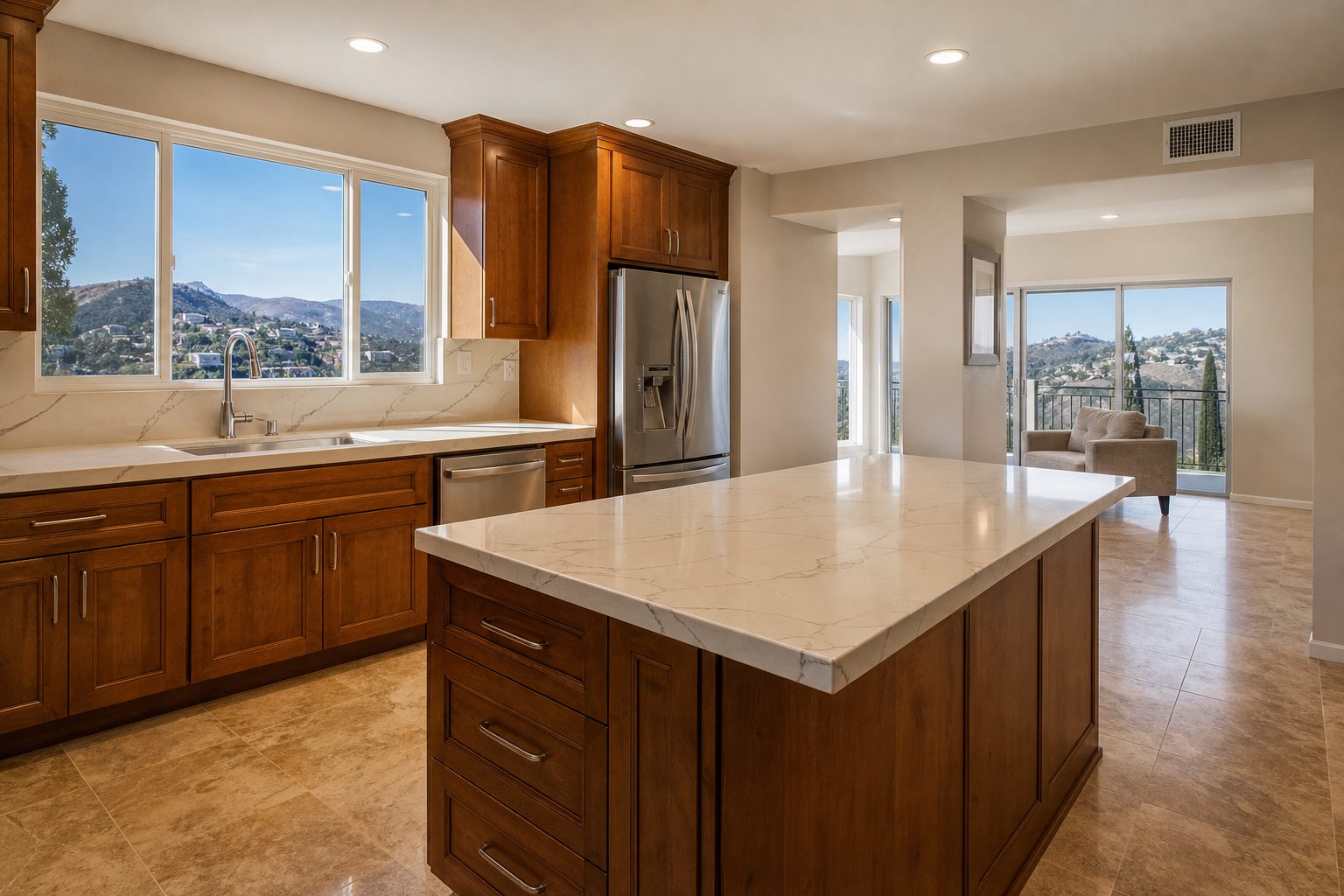
- Kitchen and bathroom updates get structured reporting. The appraiser now documents the extent, condition, and completion dates of renovations in a standardized format.
What does this look like on the ground? If you are selling in the Northbridge area of Valencia, where the median sale price hit $1.1M as of the latest tracked data (up 25.1% year-over-year per Resideline), your appraiser is now cataloging far more detail about why that price is justified. That precision can work in your favor, or it can raise questions you were not expecting.
How New Appraisal Procedures May Delay Closing Dates in the SCV
This is where I tell my clients to pay close attention. With 62 closed transactions under my belt and a 5-star average across 21 client reviews, I have navigated plenty of appraisal hiccups. But this transition introduces a new layer of friction.
According to industry analysis from Atlantic Coast Mortgage and Competitive Mortgage sources, there may be an adjustment period as appraisers, lenders, appraisal management companies, and software providers transition to the new system. What I am seeing locally is that appraisers serving the Santa Clarita Valley are still getting comfortable with the new format.
Consider this: homes in Valencia are currently averaging 79 days on market, up significantly from 52 days last year, according to current market tracking data. That timeline already factors in buyer selectivity. Now layer in the possibility that an appraisal under UAD 3.6 takes additional days for the appraiser to complete, plus potential revision requests if disaster mitigation data or room-level detail is incomplete. You can see how a 30-day escrow could stretch to 40 or 45 days.
For sellers listing in Saugus or Canyon Country, where inventory has surged and homes are averaging 53 to 75 days to sell (per SCV market data as of mid-2026), any appraisal delay compounds an already extended selling timeline. What I tell my clients is this: build extra time into your contingency periods now, before you are scrambling at the finish line.
Disaster Mitigation Reporting and Why It Matters in Canyon Country, Saugus, and Newhall
Here is a component of UAD 3.6 that is especially relevant if you own property in the hillside neighborhoods of the Santa Clarita Valley. Under the new reporting framework, there are twelve disaster mitigation components that appraisers must address as structured data, per Fannie Mae and Freddie Mac’s updated standards.
For Southern California, and specifically for homes near the fire-prone corridors of Canyon Country, parts of Saugus, and the hillsides above Newhall, the relevant mitigation features include:
- Earthquake retrofitting (bolted foundations, cripple wall bracing)
- Brush clearance and defensible space compliance
- Fire-resistant roofing and windows
- Wind-resistant construction features
If you have invested in fire-resistant roofing, replaced single-pane windows with dual-pane fire-rated glass, or maintained your brush clearance beyond the minimum requirements, those features are now captured as structured data in the appraisal. That is potentially a major advantage for your property’s valuation.
On the flip side, if you have not documented those improvements, or if you are uncertain whether your property meets current mitigation standards, you may face revision requests from the appraiser that slow down your transaction. For agents, missing mitigation details can trigger follow-up cycles that delay funding, according to the Competitive Mortgage analysis of UAD 3.6 impacts.
What Sellers in Valencia’s North Park, West Creek, and Tesoro Should Prepare Before Listing
Preparation is the name of the game under the new appraisal framework. Whether you are in [Alta Vista](https://timothyatwood.com/search/Alta Vista), [West Hills](https://timothyatwood.com/search/West Hills), [West Creek](https://timothyatwood.com/search/West Creek), North Park, or Tesoro, here is what I recommend having ready before your home hits the market:
Document Every Improvement with Dates and Permits
Under UAD 3.6, the appraiser needs accurate detail on ADUs, additions, and outbuildings, each of which now has its own reporting fields per Fannie Mae’s updated standards. If you converted your garage, added a permitted ADU, or built out a patio cover, gather your permits, receipts, and completion dates now. This is not optional documentation anymore; it is structured data that the appraiser must report.
Provide Accurate Floor Plans or Sketches
Because GLA is retired and replaced by four separate area classifications, any discrepancy between your home’s recorded square footage and the appraiser’s measurement could surface as a valuation issue. Providing a professional floor plan upfront eliminates surprises. In a market where Valencia’s sale-to-list price ratio sits at 99.14% (as of March 2026, per SCV market data), even a small appraisal gap can derail a deal.
Disclose Energy Efficiency and Green Features
UAD 3.6 includes expanded fields for HVAC type, insulation quality, window performance, and solar panel systems, per Fannie Mae and Freddie Mac’s updated UCDP requirements. If your Saugus home has newer HVAC, upgraded insulation, or owned solar panels, make sure your agent can present that information to the appraiser. These features now have a structured place in the report, and they can positively influence comparable selection.
Understand How Concessions Are Reported
If you are offering buyer concessions, such as paying closing costs, buying down the buyer’s interest rate, or offering credits, the appraiser must now account for those concessions in the valuation analysis under UAD 3.6. I tell every seller: be strategic about concessions, because they are no longer invisible to the appraisal.
Which Loan Types Are Affected and the Timeline You Need to Know
Not every transaction is immediately impacted. Here is how the rollout breaks down, per Fannie Mae and Freddie Mac’s published UCDP timeline:
- Conventional loans (Fannie Mae and Freddie Mac): Required for all new appraisal submissions after November 2, 2026
- FHA loans: FHA announced that its Electronic Appraisal Delivery portal is now available for optional broad production submissions using UAD 3.6, per HUD’s October 2026 announcement, but no mandatory date has been set
- VA and USDA loans: No adoption dates announced yet
- Jumbo, portfolio, and non-agency loans: Follow each investor’s own requirements
- Non-lending appraisals (estate, divorce, tax appeal): Not affected
The key date sellers need to circle is August 6, 2026, which has already passed. Since that date, the UCDP has been returning warning messages on legacy UAD 2.6 submissions. After November 2, 2026, legacy submissions will no longer be accepted for new conventional appraisals. The entire legacy pipeline is scheduled for full retirement by May 3, 2027.
So if you are planning to list your Valencia or Saugus home this fall, your buyer’s appraisal will almost certainly be completed under the new UAD 3.6 framework.
Frequently Asked Questions
What is UAD 3.6 and when does it take effect in California?
UAD 3.6 is the updated Uniform Appraisal Dataset required by Fannie Mae and Freddie Mac. It replaces legacy appraisal forms with a single dynamic digital report. The mandate takes effect November 2, 2026 for all new conventional loan appraisal submissions to the UCDP, per Fannie Mae and Freddie Mac’s published timeline. It applies to California sales just as it does nationwide.
Will the new appraisal requirements make my Valencia home sell for less?
Not necessarily. The new system captures more data, which can actually work in your favor if your property has been well maintained and improved. Homes in Valencia’s Northbridge area, for example, showed a median sale price of $1.1M as of recent Resideline tracking. The key is documentation and accurate reporting.
How many data points does the new appraisal report capture?
Under the legacy format, appraisers collected around 29 core data points. Under UAD 3.6, that number jumps to approximately 1,100 to 1,200 data points, per industry analysis of the new MISMO 3.6 standards. This includes room-level detail, disaster mitigation features, and energy efficiency metrics.
Should I adjust my listing timeline because of UAD 3.6?
Yes, I recommend building in extra time for contingency periods. With Valencia homes already averaging 79 days on market (per current tracking data) and the new appraisal format potentially adding processing time, planning for a longer closing window is smart.
Are FHA loans affected by the November 2026 mandate?
FHA has opened optional UAD 3.6 submissions through its Electronic Appraisal Delivery portal, per HUD’s October 2026 announcement, but has not set a mandatory transition date. Legacy FHA appraisal reports are still accepted.
What is the biggest change sellers in Saugus and Canyon Country should know about?
Disaster mitigation reporting. Under UAD 3.6, twelve mitigation components are now structured data fields. For SCV homes near fire-prone hillside areas, features like fire-resistant roofing, brush clearance compliance, and earthquake retrofitting are now formally documented in the appraisal.
Does the new appraisal system affect how my home’s square footage is reported?
Yes. The term “Gross Living Area” is retired under UAD 3.6 and replaced by four separate area classifications following ANSI standards, per Fannie Mae’s updated requirements. Any discrepancy between your home’s recorded and measured square footage could become a valuation issue.
Will seller concessions be treated differently under UAD 3.6?
Concessions and incentives must now be accounted for in the appraiser’s valuation analysis under the new framework, per Fannie Mae and Freddie Mac’s UCDP standards. If you are paying buyer closing costs, buying down rates, or offering credits, expect those to be formally documented.
Do I need to provide documentation about my home improvements to the appraiser?
Providing permits, receipts, and completion dates for major improvements is strongly recommended under UAD 3.6. ADUs, additions, and outbuildings each have their own reporting fields in the new system. Accurate records help prevent revision requests that could delay your closing.
How do I find an agent who understands the new appraisal process in the Santa Clarita Valley?
Working with an agent who has deep experience in the local market and understands how UAD 3.6 affects contingencies, pricing, and closing timelines is essential. If you are selling your home in the Santa Clarita Valley, having someone who focuses specifically on helping sellers navigate exactly these kinds of shifts makes all the difference.
The Bottom Line
The UAD 3.6 appraisal overhaul is real, it is happening in less than a month, and it will directly affect how your Valencia, Saugus, Canyon Country, or Newhall home is evaluated by every buyer using a conventional loan. The sellers who come out ahead will be the ones who document their improvements, understand how disaster mitigation and energy features now factor into appraisals, and build realistic timelines into their contracts.
With over 12 years of experience selling homes across the Santa Clarita Valley and 21 five-star client reviews, I am actively helping sellers in North Park, West Creek, Tesoro, Alta Vista, and throughout Valencia and Saugus prepare for this transition. If you have questions about how the new appraisal requirements affect your specific home selling strategy, I would love to talk it through with you. You can reach me, Timothy Atwood with Park Regency Realty, at 213-598-8205 or through my website at timothyatwood.com. Let us make sure your next sale closes smoothly, new appraisal rules and all.